ADA Portable Washroom Rental and the International Sign of Accessibility
When individuals discuss access, they usually imagine irreversible structures, ramps poured in concrete, or automated doors at a medical facility or college. Mobile washrooms hardly ever go into the discussion initially. Yet for any person holding a festival, handling a public occasion, collaborating an area gathering, or preparing basic mobile sanitation, the inquiry is immediate and practical: will certainly every guest be able to use the washroom with dignity?
That is where the ADA portable washroom issues, and where the International Icon of Availability brings actual weight. The sign is not decoration. It is an indication that an unit is meant to serve individuals that need an easily accessible toilet space, and under federal access standards, that identification is required for easily accessible portable toilet units.
This subject often tends to obtain lowered to an easy rental concern. Do I require one larger unit with the mobility device symbol on the door? In method, that framing is as well narrow. Availability is not just concerning purchasing an ada portable toilet. It has to do with ensuring the device is given in the right number, determined appropriately, and positioned where somebody can actually reach and utilize it.
The requirement that regulates mobile toilet accessibility
For portable toilet services in the USA, the regulating government availability requirement is the 2010 ADA Specifications for Accessible Style, as translated by the U.S. Access Board and the Department of Justice. That issues due to the fact that it gives owners, event organizers, and rental consumers a real legal structure rather than guesswork.
People often assume momentary arrangements run under looser regulations. That presumption produces issues. The Accessibility Board has actually made clear that access scoping uses also at short-lived occasions. If portable single customer bathroom systems are grouped in a cluster, at the very least 5 percent of the devices in that collection must be accessible. That is among the clearest and crucial pieces of support in this area.
The phrasing seems straightforward, yet the implications are worthy of focus. If you rent out a financial institution of portable commodes for a weekend arts reasonable, an outside wedding open to the general public, a flea market, or a community event, the easily accessible units are not optional bonus. The demand applies to the collection itself. The momentary nature of the occasion does not get rid of the obligation.
That is frequently the first misconception I see in conversations concerning portable hygiene. The second is the idea that an unit counts as easily accessible just because it is larger than a conventional delay. Dimension alone is not the test.
What makes an easily accessible mobile commode device accessible
An ada obtainable mobile restroom has to do more than exist. It needs to fulfill the relevant technological requirements for commode rooms. According to the Access Board assistance showed in the ADA criteria, that includes fixture clearances, turning room, door maneuvering clearances, and appropriate grab bar and water wardrobe clearance rules.
Those details are not cosmetic. They are the distinction in between an unit that can be used independently and one that only looks compliant from a distance.
Turning space matters due to the fact that a person making use of a mobility device or other movement gadget requires area to go into, placement, and exit safely. Door maneuvering clearance issues due to the fact that the act of opening a door can be tough or impossible if the area is too tight. Grab bars and water wardrobe clearances matter due to the fact that transfer and support are not abstract ideas. They are everyday necessities for many users.
This is why the expression ada certified portable bathroom requirements should never be dealt with like box monitoring. The standards talk with genuine human activity and real human requirement. A system that carries the appropriate tag however stops working on sensible accessibility is not serving the purpose of the law or the individual standing in front of the door.
Why the International Sign of Availability matters
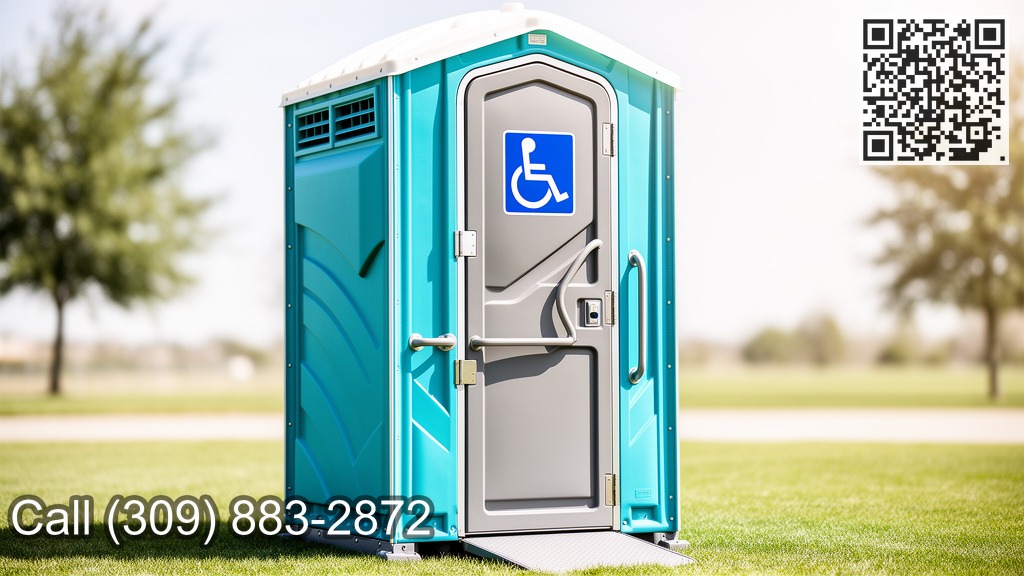
The International Sign of Ease of access is just one of the most identifiable public symbols in the USA. On an easily accessible portable commode, it does a really specific task. Under the ADA standards, easily accessible portable commode devices need to be related to that symbol.
That recognition offers several purposes at once. Initially, it helps users discover the correct system quickly, specifically in a row of comparable looking toilets. Second, it signifies to team, guests, and the public that access has been taken into consideration in the sanitation strategy. Third, it lowers complication in congested settings where a person might not have the time, energy, or privacy to evaluate every unit.
The symbol also has a quiet yet vital social effect. It tells people with handicaps that a person anticipated them to be there.
That may seem like a small thing, yet it is not. At lots of occasions, individuals observe right away when easily accessible facilities were dealt with as an afterthought. They notice when the only larger device is concealed behind fencing, blocked by mud, or placed much from the remainder of the toilet location. They notice when the symbol is missing out on, leaving them to ask for assistance in a scenario where privacy matters.
Identification alone is not compliance, however absence of identification is its own trouble. A true ada certified easily accessible mobile toilet needs to be both literally usable and noticeably designated.
Placement is where many access plans fail
A portable bathroom can satisfy the technological functions inside the device and still stop working the larger ease of access test if no one can reach it. The standards require an accessible route and accessible entrance. If ramps or touchdowns are needed, those components also have to abide by ADA technological requirements.
This is one of one of the most forgotten issues in ada mobile commode rental planning. Individuals focus on the device and neglect the ground around it.
An obtainable course is not a ritualistic path. It has to work for the real problems of the website. If the device sits beyond rough surface, deep gravel, unsteady turf, or a sudden degree change without a certified service, the customer has been denied access before they ever touch the door. The very same trouble arises when a system is parked where the entrance location comes to be pointless after rainfall or hefty foot traffic.
That is why positioning choices should never be made by benefit alone. It is insufficient to say, "We have an ada certified mobile restroom someplace on site." The far better inquiry is, "Can a person reach it and enter it without unneeded obstacles?"
This point becomes particularly important at short-term events due to the fact that short-lived frequently means improvisated. Coordinators are taking care of delivery windows, group flow, vendor places, fencing, utilities, and irregular ground. It is simple for the accessible bathroom to obtain pressed to the side of the format. That kind of decision may solve a hosting issue for staff while developing an accessibility issue for guests.
The 5 percent guideline, and what it suggests in the real world
The 5 percent requirement for clusters of mobile solitary customer toilet systems is simple to estimate and in some cases harder for individuals to image. The useful lesson is that availability has to be represented throughout each collection, not dealt with as a vague assurance somewhere else on the property.
If there is one restroom bank at a site, the planning problem is simple. If there are a number of different restroom banks, the analysis comes to be a lot more site certain due to the fact that each collection issues. In day to day planning discussions, this is where people commonly get on oversimplification. They assume a single accessible device at one end of a big location covers all toilet requires. The scoping rule presses against that shortcut.
This is not simply an issue of math. Range, group thickness, and path conditions all form whether accessibility is significant. While the validated requirements here talk straight to the 5 percent need and technical availability criteria, the spirit behind those policies is clear enough. Accessible hygiene should belong to the real washroom strategy, not a token holiday accommodation that leaves one team with fewer choices and longer trips.
When clients inquire about ada compliant mobile toilets, they are usually trying to stay clear of the obvious error of renting none. A better discussion goes one action better and asks whether the arrangement of units throughout the website reflects how individuals will certainly relocate via the event or location.
Temporary does not suggest exempt
One of the strongest false impressions in this subject is the concept that a short-term setup leaves availability responsibilities. The Gain access to Board advice clearly mentions that the appropriate mobile commode scoping uses also at short-lived events. That factor alone settles a great deal of confusion.
There is, however, a narrow context that people often find out about and misapply. The older 1991 criteria differentiated portable toilet systems at construction websites used solely by construction workers, dealing with those in a different way under the mobile toilet ease of access scoping demand referenced there. That does not erase the available unit requirement for basic portable bathroom rentals. It simply indicates there is a specific context that must not be casually borrowed to justify noncompliance elsewhere.
This difference matters due to the fact that I have actually seen people make use of the expression "construction site regulations" as if it were a broad exception for any type of harsh or short-lived atmosphere. It is not. If the leasing is for general usage, the typical accessibility need remains in play.
That is specifically essential for communities, nonprofits, colleges, event operators, and exclusive coordinators who may think pristine portables restroom trailer rentals 250-gallon holding tank that "temporary" and "informal" fit. Federal availability standards do not vanish because the occasion lasts eventually rather than one year.
What occupants need to ask before signing off
The most beneficial discussions about an ada compliant portable bathroom occur prior to shipment. By the time the system is in place and the crowd has actually gotten here, preventable errors end up being ada portable toilet rental pricey and embarrassing.
An occupant does not need to come to be a code specialist overnight, but a couple of grounded inquiries can avoid apparent failures.
- How many devices are in each cluster, and how will the obtainable devices be counted within that cluster?
- Will the available mobile toilet be marked with the International Symbol of Accessibility?
- Is there an easily accessible course to the unit, consisting of the entrance area?
- If a ramp or landing is needed, will it fulfill the suitable ADA technological requirements?
- Has the placement been looked for functional use under most likely site conditions?
Those concerns are moderate, yet they transform the tone of the rental process. They relocate the discussion far from "Send me one handicap system" and towards a more exact understanding of what an ada handicap obtainable portable bathroom is intended to accomplish.
Language issues below, too. Many clients still make use of older shorthand when speaking with suppliers. The far better emphasis is out tags alone but on whether the system and its positioning satisfy the acknowledged availability requirements.
Compliance is wider than a sticker on the door
Accessibility enforcement is stagnating toward much less examination. If anything, ADA compliance is significantly part of a broader culture of operational liability. One current instance outside mobile sanitation aids make the factor. In April 2026, the Department of Justice expanded the target date for state and city government internet and mobile access policies to April 26, 2027 for bigger entities. That growth is not about portable toilets directly, but it shows a wider environment in which availability obligations continue to be energetic and noticeable throughout sectors.
For organizers and residential or commercial property managers, the lesson is straightforward. Availability must be treated as part of preparation, not damage control.
That wider context matters because portable restroom access can look tiny on paper while really feeling enormous on the ground. If a visitor can get in a place, get food, and enjoy an efficiency but can not make use of the restroom individually, the event has not come in any kind of purposeful feeling. Individuals bear in mind that experience, and they should.
Common judgment calls that are entitled to care
The hardest accessibility concerns are not always legal puzzles. Often they are ordinary site choices made under pressure. Should the easily accessible device rest closest to the main crowd path, even if distribution is harder there? Should the washroom cluster be transferred to avoid mud, also if that produces a much longer route? Need to a different financial institution of common systems be added near one area if doing so leaves the only accessible system farther away?
There is no universal manuscript for those call the restricted confirmed material below, yet the criteria tell us where to keep our attention. The available unit should be part of the collection scoping, properly determined, obtainable by an accessible course, and compliant in its entrance and toilet space functions. When trade offs develop, those are not the products to bargain away.
In actual planning, access often enhances when someone takes a slower consider format illustrations or website maps. A device moved twenty feet can make the difference between a workable path and an aggravating one. A delivery group informed ahead of time can avoid putting the available entryway towards a blockage. A quick field check after configuration can capture a positioning concern that was unnoticeable on paper.
None of that requires grand language. It calls for care.
The human side of a compliant setup
It is easy to discuss requirements in technological terms. Turning room. Navigating clearance. Accessible route. Those phrases are necessary, but they can appear far-off unless we link them back to the reason they exist.
A person making use of a wheelchair must not need to wonder whether the washroom noted for them is in fact useful. A parent assisting an adult family member ought to not have to browse a path that stops at soft ground or a high transition. A site visitor with restricted endurance must not discover that the only available device is on the far side of the location because someone treated it as devices instead of a needed facility.
An ada mobile bathroom is part of hospitality, public accessibility, and basic regard. The International Sign of Ease of access on the door ought to represent a reliable promise, not a hopeful guess.
That is why the best ada certified available mobile toilets are not kept in mind for being unique. They are kept in mind for working without drama. People discover them, reach them, utilize them, and proceed with their day. That is exactly how it should be.
What great preparation looks like
Good preparation for ada certified portable washrooms is seldom fancy. It is thoughtful, specific, and a little repetitive in the right ways. Somebody checks the number of systems in each collection. Somebody confirms that the available system is really identified with the International Icon of Accessibility. A person looks at the route from arrival factors, not simply from the delivery truck. Somebody takes notice of ramps and landings if they are needed. Somebody validates that the obtainable entry will continue to be functional when the site is fully active.
That kind of persistance is very easy to underestimate due to the fact that it stops problems people never need to see. No distressed search. No unpleasant request for support. No last minute scramble to transfer a system after complaints.
For tenants searching phrases like ada certified portable bathroom, ada certified portable bathrooms, or ada certified mobile washroom, one of the most beneficial way of thinking is to believe beyond the item name. You are not just leasing a box with extra floor room. You are setting up an easily accessible toilet space in a short-lived format, and the exact same seriousness must follow.
The legal criteria supply the framework. The sign on the door gives recognition. The course and entry provide actual gain access to. The technical features inside the device give usability. Eliminate any type of one of those items, and the whole setup begins to fail.
Accessibility in portable sanitation does not request for perfection in every imaginable condition. It asks for compliance grounded in the ADA requirements and for intending based in common feeling. For any kind of event or website open up to the public, that is not an unreasonable problem. It is the practical minimum for treating people fairly.
And when the available unit is properly counted, correctly put, properly determined, and really functional, the result is more than compliance. It is alleviation, independence, and the silent guarantee that everyone was anticipated to be there.
 Ask ChatGPT
 Ask Grok
 Ask Perplexity
 Ask Claude
 Ask Google AI
 Ask You